
Interesting Facts about Churros
Every Sunday morning, the good folk of South Dublin follow the aromatic waves of fried pastry, warm cinnamon and sugar to our Crepe Wagon in Herbert Park. What exactly is a churro, many ask while they gobble into these addictively warm goodies. We don’t usually have the time to give a full explanation so we thought we would give you some interesting facts about churros here.

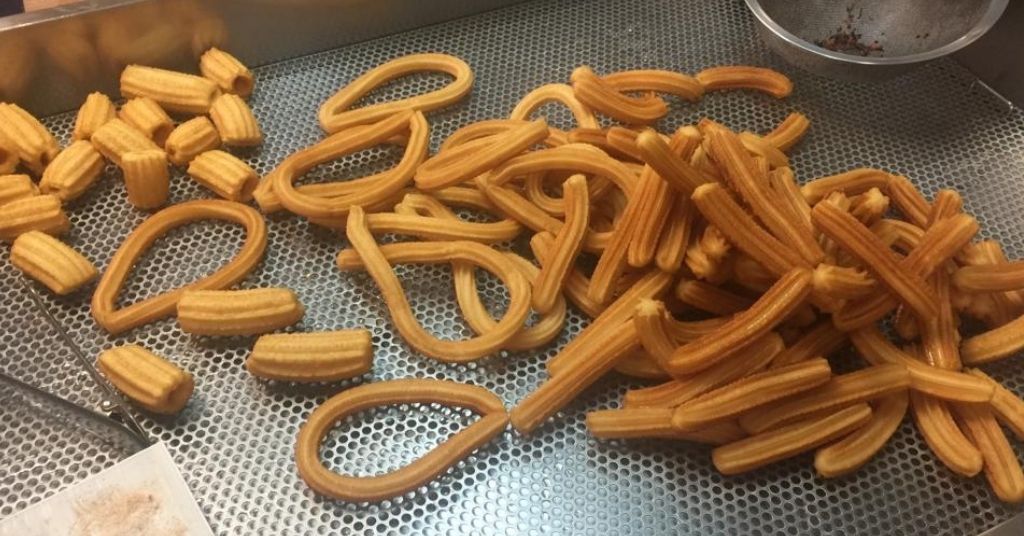
 You can identify churros by the ridges that run along their sides. Whether they have straight sections or curve into heart-shaped loops or giant spirals, they all have a tell-tale star-shaped exterior. This comes from piping the dough through a special extruder called a Churrera.
This shape lets them cook inside and harden outside at the same time to deliver that unforgettable sensation of gorgeous fluffy crispness. It also prevents steam from getting trapped inside. That is not something you want to happen in hot oil (trust us on this!). The other benefit of ridges is that they create more surface area for all that lovely warm cinnamon-y sugar to cling to.
 It is true there is a similar dish in China called You-Tiao (although it is saltier) and the Emperor went to great lengths not to let the recipe get into the hands of the Portuguese. It is also a fact that the shepherds tended sheep called Churra who had distinctive curly brown horns that resembled the shape of Churros.
 Nice stories, but a bit simplistic. Foods rarely need such epic events to move. The Silk Road was open to China a long time before the Portuguese got there. There are different versions of fried dough foods all along that route.
The Middle East is no stranger to such food and this would explain the long term use of cinnamon. There are engravings in ancient Egyptian pyramids showing the preparation of a Churros-like food. Fried dough appears in Roman cookbooks and there is mention of it in Ancient Greece.
 Even before the time of the Spanish Shepherds there are records of Fritter syringes that sound like Churreras. This is not surprising. The Arabs ruled Spain from the 8th century and would have brought Zulâbiyya with them from Persia. According to a 13th Andalusian recipe book it is another Churro-like food.
What we do know for sure is that European conquistadors brought fried dough to Latin America. It then developed into the sweet dish we know and love today. The opening of that continent gave us sugar, which became the classic churro topping.
The natives also introduced a new ingredient that became instantly fashionable in the royal courts of Europe – chocolate. Today, that is the main difference between Spanish and Mexican Churros. In Spain, chocolate is the most popular dip while in Mexico they fill the Churro with a rich caramel sauce called Dulce de Leche.
After that, the churro appears more regular in history. The first mention of a Churrero (someone who makes churros) was in the 17th century in Spain. Bakers started to specialise in them and shops opened in the 19th century selling them in towns. But it wasn’t until 1929 before the word Churro appeared in popular use.
 One thing that the Spanish frown upon is eating Churros as a dessert. They are perfect for in-between meals but can be just a little bit too heavy for afters. Their fluffy warm goodness is perfect on cold Irish days too.
 While we do eat them cold (waste not-want not), we definitely prefer them when they are warm. You want that lovely crispy-outside floaty-inside sensation in your mouth. The best time for that is when they are fresh out of the fryer and you can feel that wonderful contrast with the crunchy sugar.
So there you have it. We hope you learned some new facts about churros. Come and visit us in Herbert Park every Sunday and discover for yourself what makes it one of the most popular outdoor snacks around the world.
What are Churros?
Churros are deep fried strips of dough that taste like fluffy cinnamon doughnut sticks. They make you feel like you have stuffed every cell in your body with warm sunshine. As a member of the ever-popular Fried Dough food family, you will find them in most countries around the world. In West Africa you can find something similar called the Puff-Puff. In India you will find the Jalebi. Churros are the Spanish version but even there you will find regional variations. Half the attraction with Churros is trying different ones. Like any other foodstuff with a simple recipe and basic ingredients there is a wide variation in results. You can find churros that are thick and fluffy and others that are thin and airy. The difference comes down to ingredients and technique. Some are made with milk, baking soda, butter, sugar, lemon rind and eggs. We like to keep it simple. We use only flour, water and salt. This is the simplest recipe and it gives the finest results. It is also vegan, so you know, healthy bonus points.
You can identify churros by the ridges that run along their sides. Whether they have straight sections or curve into heart-shaped loops or giant spirals, they all have a tell-tale star-shaped exterior. This comes from piping the dough through a special extruder called a Churrera.
This shape lets them cook inside and harden outside at the same time to deliver that unforgettable sensation of gorgeous fluffy crispness. It also prevents steam from getting trapped inside. That is not something you want to happen in hot oil (trust us on this!). The other benefit of ridges is that they create more surface area for all that lovely warm cinnamon-y sugar to cling to.
What is the history of Churros?
When it comes to history, the facts about churros are controversial. We already know that treats like Churros are widespread. They are easy to invent and like all fried dough foodstuffs, they will feed a lot more people than the raw ingredients on their own. There are a two popular theories. Some say they originated in China and Portuguese sailors smuggled them to Europe in the 16th century. Others say they were invented in medieval times by Spanish shepherds in the mountains who needed something they could cook in frying pans.
It is true there is a similar dish in China called You-Tiao (although it is saltier) and the Emperor went to great lengths not to let the recipe get into the hands of the Portuguese. It is also a fact that the shepherds tended sheep called Churra who had distinctive curly brown horns that resembled the shape of Churros.
You-Tiao from China
Even before the time of the Spanish Shepherds there are records of Fritter syringes that sound like Churreras. This is not surprising. The Arabs ruled Spain from the 8th century and would have brought Zulâbiyya with them from Persia. According to a 13th Andalusian recipe book it is another Churro-like food.
What we do know for sure is that European conquistadors brought fried dough to Latin America. It then developed into the sweet dish we know and love today. The opening of that continent gave us sugar, which became the classic churro topping.
The natives also introduced a new ingredient that became instantly fashionable in the royal courts of Europe – chocolate. Today, that is the main difference between Spanish and Mexican Churros. In Spain, chocolate is the most popular dip while in Mexico they fill the Churro with a rich caramel sauce called Dulce de Leche.
After that, the churro appears more regular in history. The first mention of a Churrero (someone who makes churros) was in the 17th century in Spain. Bakers started to specialise in them and shops opened in the 19th century selling them in towns. But it wasn’t until 1929 before the word Churro appeared in popular use.
When are Churros eaten?
Churros are a traditional breakfast dish, like croissants for the French. Sunday breakfast time is Churro time in Spain. Spanish folk pop by our spot on Sunday mornings and grab a handful for the family before scooting back home for breakfast. They swear by them as the ultimate hangover cure too. For many Spanish people, picking up Churros in the early hours of the morning is the signal that it is time to head home after a long night out.
One thing that the Spanish frown upon is eating Churros as a dessert. They are perfect for in-between meals but can be just a little bit too heavy for afters. Their fluffy warm goodness is perfect on cold Irish days too.
While we do eat them cold (waste not-want not), we definitely prefer them when they are warm. You want that lovely crispy-outside floaty-inside sensation in your mouth. The best time for that is when they are fresh out of the fryer and you can feel that wonderful contrast with the crunchy sugar.
So there you have it. We hope you learned some new facts about churros. Come and visit us in Herbert Park every Sunday and discover for yourself what makes it one of the most popular outdoor snacks around the world.